Moonball Sprint: How to Run from the Baseline and Master the High Defensive Lob in Tennis
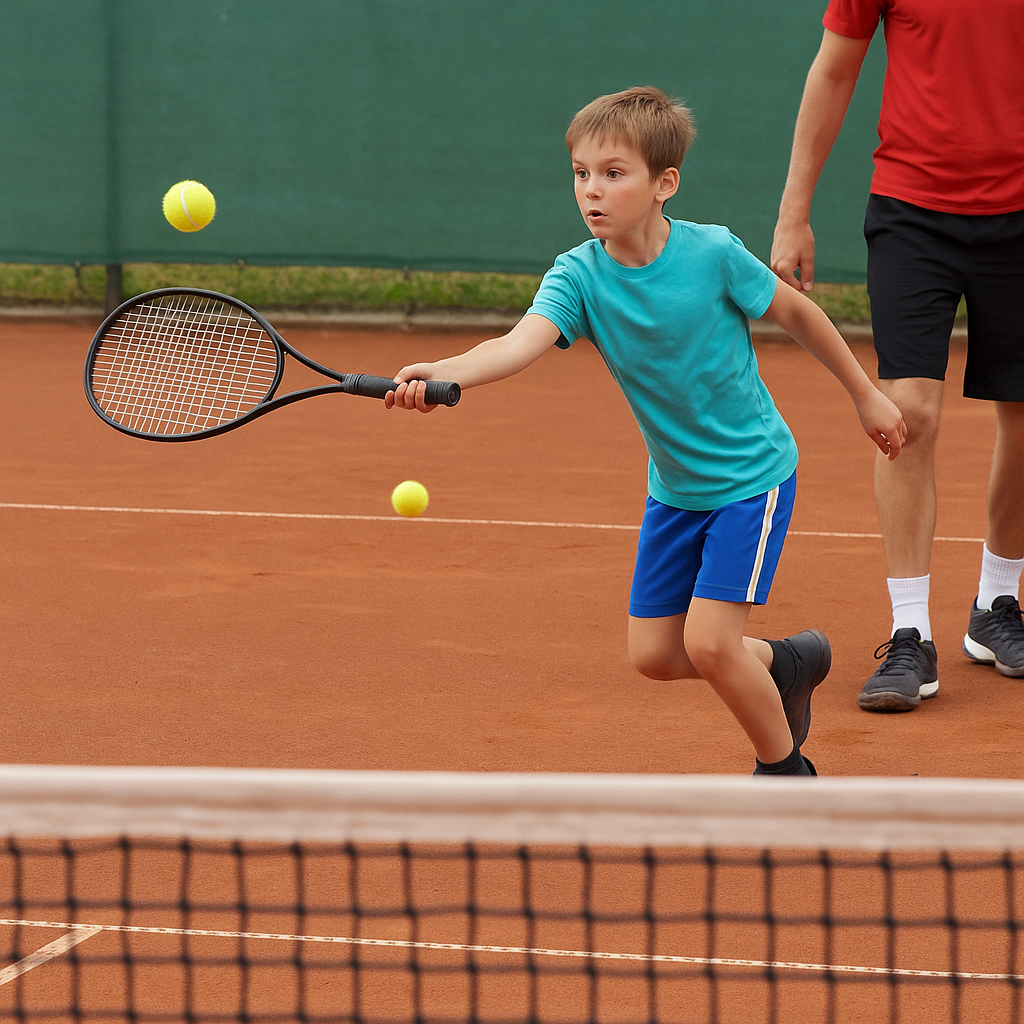
Mondball Sprint: Mastering the High-Arcing Rally from the Baseline
In the world of tennis, not all groundstroke rallies follow the same script. One especially intriguing variation—and one that is increasingly used in both recreational and competitive play—is what German-speaking coaches call the Mondball or “moonball”: a high-arching, deeply landing topspin or lob-like stroke that bounces high and can disrupt the rhythm of opponents. But when a player combines that with a sprint from the baseline to reach and return those high balls, the tactical and technical dimensions become particularly rich. In this article, we explore the concept of the Mondball sprint, why it’s effective, how to execute it, and the training methods to improve it.
What Is a “Mondball”?
A Mondball is essentially a type of lob or high topspin shot. According to the SchlägerClub, a Mondball is a “form of a lob.” schlaegerclub.de Unlike a traditional flat groundstroke, it flies higher, giving more clearance over the net. This height can throw off the timing and positioning of your opponent, especially in longer rallies. schlaegerclub.de
The lob, more generally, is used both offensively and defensively in tennis. A defensive lob typically forces the opponent back, prolonging the point, while an offensive lob may catch an opponent off guard at the net. Wikipedia
In practice, the Mondball is often delivered with heavy topspin, giving it a steep trajectory and a deep bounce. Topspin contributes to the ball’s safety (reducing the chance of hitting the net) and allows it to drop back into the court. Wikipedia
Why Combine It with a Sprint?
Here’s where the “sprint” part comes in. In many rallies, when a player faces a high, looping ball, they must run backward from the baseline to reach it and then carefully time their swing. But top-level players and smart tacticians don’t just wait passively—they actively sprint to position themselves under the ball, enabling more controlled and powerful responses.
There are several benefits to combining a Mondball with a sprint:
- Improved Positioning: Running into the right spot allows the returning player to strike the ball more cleanly, whether on the rise, at the apex, or after one bounce.
- Better Timing: By choosing the point of contact—whether on the rise or during fall—you can control trajectory, spin, and placement.
- Tactical Pressure: If you can reliably return high, deep balls with this method, you put sustained pressure on a player who uses Mondballs, preventing them from dictating the pace or rhythm.
- Physical Conditioning: The sprint element builds footwork, stamina, and agility—key physical attributes in competitive tennis.
Technique: How to Perform the Mondball Sprint Effectively
Here is a step-by-step breakdown of how to execute the Mondball sprint, along with technical tips:
- Read the Incoming Ball Early
- As soon as you see the ball is being hit high, decide whether you’ll attempt to take it on the rise, at the peak, or after a bounce.
- Use your peripheral vision and anticipate arc, spin, and depth.
- Explosive Movement
- From the baseline, take a short but powerful sprint. Use quick, choppy steps rather than long strides, to maintain balance and adjust direction if needed.
- Lower your center of gravity slightly to be ready to absorb the shock of landing or contact.
- Contact Point
- On the Rise / At the Apex: Hitting early is riskier but can give you a more offensive shot. Many advanced players try to do this to take time away from the opponent.
- After One Bounce: Safer for most. You can use the bounce to settle and choose a stable hitting zone.
- Racket Preparation
- Use a looser, more relaxed racket grip during the swing, allowing for upward acceleration.
- Swing from low to high to maximize topspin. As some players advise, you should not just hit under the ball but brush up on its back to generate spin. Reddit
- Open racket face enough to lift the ball, but don’t overdo it — you want height and depth.
- Follow Through
- Extend your swing upward and outward. The follow-through helps guide the ball and maintain control.
- A full, fluid follow-through with a loop-like motion helps generate topspin or get the right arc.
- Recovery
- After hitting, immediately recover by moving back to a ready position.
- Because you sprinted, your energy may be spent; use small recovery steps to re-balance quickly.
Training Exercises for the Mondball Sprint
To master this skill, you need specialized drills. Here are some training ideas, many inspired by youth tennis programs and technical training materials:
- High-Lob Over a Rope / Obstacle
- As in the orange-level youth drills, set up an obstacle (e.g., a stick at about 1.5 m height) on the opponent’s side. Try to hit lobs that clear this obstacle. Kindertennis | tennis.de
- Combine this with movement: after the coach hits a high ball, sprint from the baseline, then perform the lob.
- Lob + Smash / Defensive Response Drill
- A classic drill described in tennis magazines: one player or coach hits high balls to another, who must run back and return with a lob, trying to target specific zones. tennis MAGAZIN
- Mix in smashes: after your lob, have another player or coach react and hit overheads or smashes, forcing you to sprint again and defend.
- Baseline Sprint & Contact Point Practice
- Place cones or markers along the baseline. The player starts at one end; a coach or partner feeds high, shallow, or deep balls. The player sprints to the optimal contact point, then hits a topspin lob or high groundstroke.
- Vary the feed (high height, deep, short) so the “read and sprint” reaction becomes automatic.
- Motor Skills & Conditioning
- Use motor-skill exercises from youth training programs: for instance, running drills with direction changes, backward-forward sprints, or shuttle runs. Kindertennis | tennis.de
- Combine these with ball feeding: after completing a sprint circuit, the coach hits a high ball, and the player must hit it accurately.
Tactical Use of the Mondball Sprint
Using the Mondball sprint effectively requires thinking beyond just the shot itself. Here are some tactical scenarios where it can be particularly useful:
- Against Aggressive Net Players: When an opponent likes to come to the net, responding with a deep, high ball while moving backward can force them to retreat or set up a weaker volley.
- In Long Baseline Rallies: If your opponent uses heavy topspin and tries to dominate with powerful groundstrokes, mixing in deep, high balls disrupts their rhythm.
- To Recover from Defensive Positions: When pushed back, instead of just lobbing defensively, you can sprint and attempt a more controlled high, deep shot to reset the rally.
- As a Mental Weapon: Seeing an opponent repeatedly struggle to handle high-bouncing balls can frustrate them. This psychological edge can pay off in tight points.
Common Mistakes and How to Avoid Them
Here are pitfalls players often fall into when trying the Mondball sprint—and how to correct them:
- Too Slow to React
- Mistake: Waiting too long before sprinting back, so you’re out of position.
- Fix: Improve anticipation by watching your opponent’s swing earlier; practice the read-then-sprint in drills.
- Poor Footwork / Balance
- Mistake: Taking huge strides, losing balance, or being off-balance when hitting.
- Fix: Use short, explosive steps. Work on agility drills that mimic the movement you’ll use during actual points.
- Incorrect Contact Point
- Mistake: Hitting too early (causing a weak shot) or too late (losing height).
- Fix: Practice different timing options (rise vs after bounce). Work with a coach or partner to feed consistent high balls.
- Racket Face / Swing Errors
- Mistake: Racket face too flat or swing too horizontal → ball goes into the net.
- Fix: Focus on brush-up swing path, open racket face. Use low-to-high motion to generate height and spin.
- Poor Recovery
- Mistake: After hitting, you’re slow to recover and your next shot is weak.
- Fix: Drills should include recovery steps. After hitting, sprint back, and be ready for the next ball.
Mental & Physical Benefits
Adopting the Mondball sprint into your game isn’t just about a flashy shot—it also builds valuable physical and mental skills:
- Agility and Conditioning: The sprinting, reading, and recovery improve your on-court fitness, making you more resilient in long matches.
- Patience and Point Construction: Rather than always going for outright winners, you learn to build points, mixing high and deep shots with pace and spin.
- Adaptability: You become more comfortable handling a variety of ball heights and trajectories, which is especially useful when facing diverse opponents.
Conclusion
The Mondball sprint is a powerful and under-utilized tool in modern tennis. By combining the high-arcing, deep shot of the Mondball with explosive baseline movement, a player can gain significant tactical and physical advantages. This technique demands good anticipation, footwork, timing, and stroke mechanics, but with deliberate practice, it can transform both your defensive and offensive game.
If you integrate targeted drills—like sprint-then-lob exercises, contact-point timing, and agility work—you’ll build the skill set needed to execute this shot in matches. And once you master it, the Mondball sprint becomes more than just a trick: it becomes a core part of how you control rallies and pressure opponents.